Investors and stakeholders skim financial documents to find data they can trust. If the text looks messy or hard to read, they may doubt the accuracy of the numbers inside. Selecting authoritative typography for financial reports helps build that confidence immediately. Good type choices signal stability and professionalism before a reader even processes the first chart.
What makes a font look trustworthy to investors?
Trust in finance often comes from tradition and clarity. Serif fonts, which have small lines attached to the end of strokes, usually feel established and serious. They remind readers of printed newspapers and official contracts. Sans-serif fonts lack these lines and feel cleaner and more modern. Both can work, but the key is consistency. A mix of too many styles looks chaotic. You want the design to fade into the background so the data stands out.
Which specific typefaces work best for annual reports?
Classic serif options often perform well for body text because they guide the eye along long lines of numbers and paragraphs. For example, Merriweather is designed for screen readability while keeping a traditional feel. For headers, a bold sans-serif can create a clear hierarchy. This contrast helps readers scan sections quickly. Avoid decorative scripts or handwritten styles, as they reduce legibility and can appear unprofessional in a fiscal context.
How do you maintain consistency across company communications?
Your annual report should not look like it comes from a different company than your press releases. Using a consistent font pairing strategy for business announcements ensures your brand voice remains stable. If your website uses a specific geometric sans-serif, try to incorporate it into your report headers. This repetition reinforces brand recognition. It tells stakeholders that the organization is organized and attentive to detail across all touchpoints.
Should financial documents match social media branding?
While tone may differ, the core typeface family should remain recognizable. You might see advice on matching serif and sans-serif fonts for LinkedIn to maintain a professional image online. Applying similar logic to financial reports creates a cohesive identity. If your social media uses a heavy bold font for impact, use a similar weight for report headings. This does not mean copying the exact layout, but keeping the typographic DNA consistent.
Are there industry standards for high-stakes documents?
Industries like law and finance share a need for absolute clarity. You can look at font duo examples for the legal industry to see how others handle serious communication. Legal documents prioritize readability above all else because misinterpretation carries risk. Financial reports carry similar risks. Adopting a conservative approach to type selection minimizes confusion. Stick to standard weights and avoid light or thin fonts that might disappear on printed pages or low-resolution screens.
What errors should designers avoid in fiscal documents?
Several common mistakes can undermine the authority of a report. First, avoid using all caps for long paragraphs. It slows down reading speed and causes fatigue. Second, do not shrink font sizes below 10 points for body text. Investors often read these documents on various devices, and small text becomes inaccessible. Third, avoid low contrast between text and background. Grey text on a white background might look stylish, but it strains the eye. High contrast ensures everyone can read the data without effort.
Practical checklist for your next report
- Choose one serif and one sans-serif font to create clear hierarchy.
- Test readability on both mobile screens and printed paper.
- Ensure line height is at least 1.5 times the font size for comfort.
- Keep font weights consistent across all pages of the document.
- Verify that all licenses allow for commercial use in public reports.
Start by auditing your current brand assets. Identify which fonts are already approved for corporate use. If you need new options, select a pair that offers distinct weights for headers and body text. Test them with a sample page of dense data before committing to the full design. This small step prevents costly revisions later.
Try It Free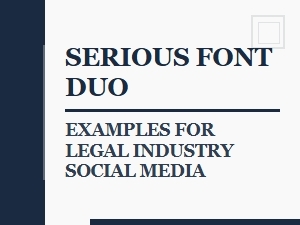 Professional Font Pairings for Law Firm Social Media
 Optimal Font Pairings for Executive Branding
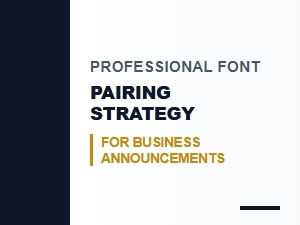 Crafting Effective Font Combinations for Business Announcements
 Adding Whimsy: Fonts That Tell Playful Stories
 Fonts That Spark Joy in Niche Communities
 The Artful Touch: Mixing Hand-Drawn Fonts