Brands often struggle to show personality without losing professionalism. Playful typography for brand storytelling solves this by using letterforms that evoke emotion while delivering your message. When you choose the right shapes and curves, you tell customers who you are before they read a single word. This approach works well for companies wanting to appear approachable, creative, or energetic.
What does playful typography actually mean for your brand?
Playful typography does not mean using comic sans everywhere. It refers to selecting typefaces with unique characteristics, such as rounded edges, irregular baselines, or decorative swashes. These details inject humor, warmth, or whimsy into your visual identity. The goal is to match the font personality with your brand voice. If your brand sounds friendly in copy, the letters should look friendly too.
Designers often achieve this by exploring creative font combinations that balance fun elements with structure. You might pair a bouncy display font with a stable body text. This ensures the design feels lively but remains easy to read across different platforms.
When is it right to use fun fonts?
Context dictates when this style fits. A law firm usually needs serious serif fonts to convey trust. However, a toy store, a bakery, or a creative agency benefits from lighter touches. Use playful styles when you want to reduce friction between you and the customer. It signals that you do not take yourself too seriously.
Social media posts often perform better with expressive types because they stop the scroll. If you are focusing on using contrast to keep readers engaged, a fun header against a clean background grabs attention quickly. This works well for promotions, event announcements, or behind-the-scenes content.
How do you maintain readability while having fun?
Legibility always comes first. A font might look unique, but if users cannot read it, it fails its job. Avoid using highly decorative fonts for long paragraphs. Reserve them for headlines, logos, or short call-to-action buttons. Body text should remain simple.
One effective strategy involves mixing whimsical styles with clean sans-serif types. The sans-serif handles the heavy lifting of information delivery, while the decorative font adds flavor. This hierarchy guides the eye without causing confusion.
What mistakes should you avoid?
Many designers overdo it by using too many different fonts in one layout. Stick to two or three maximum. Another common error is ignoring spacing. Playful fonts often have irregular kerning, so you must adjust letter spacing manually to prevent collisions. Also, ensure the font works at small sizes. Some details disappear on mobile screens.
When selecting specific typefaces, consider options like Fredoka for a rounded, friendly look. Test your choices in real-world scenarios before committing. Print a sticker, mock up a social post, or view it on a phone. If it feels hard to read, switch to something simpler.
How do you get started today?
Start by defining the emotion you want to evoke. Do you want to feel energetic, calm, or silly? Gather three fonts that match that feeling. Test them against your current logo and color palette. Make sure they complement existing assets rather than clashing with them.
- Pick one display font for headlines.
- Choose one simple font for body text.
- Test readability on mobile devices.
- Check contrast ratios for accessibility.
- Limit decorative usage to key moments.
Keep your library organized so you do not waste time searching later. Save web-safe versions and print-ready files separately. Consistency builds recognition over time.
Get Started Fonts That Spark Joy in Niche Communities
 The Artful Touch: Mixing Hand-Drawn Fonts
 Whimsical Fonts Meet Modern Sans-Serifs
 Authoritative Typography for Financial Reports
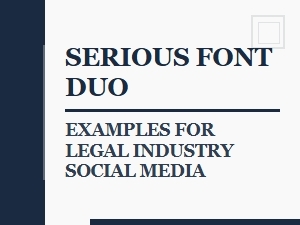 Professional Font Pairings for Law Firm Social Media
 Optimal Font Pairings for Executive Branding